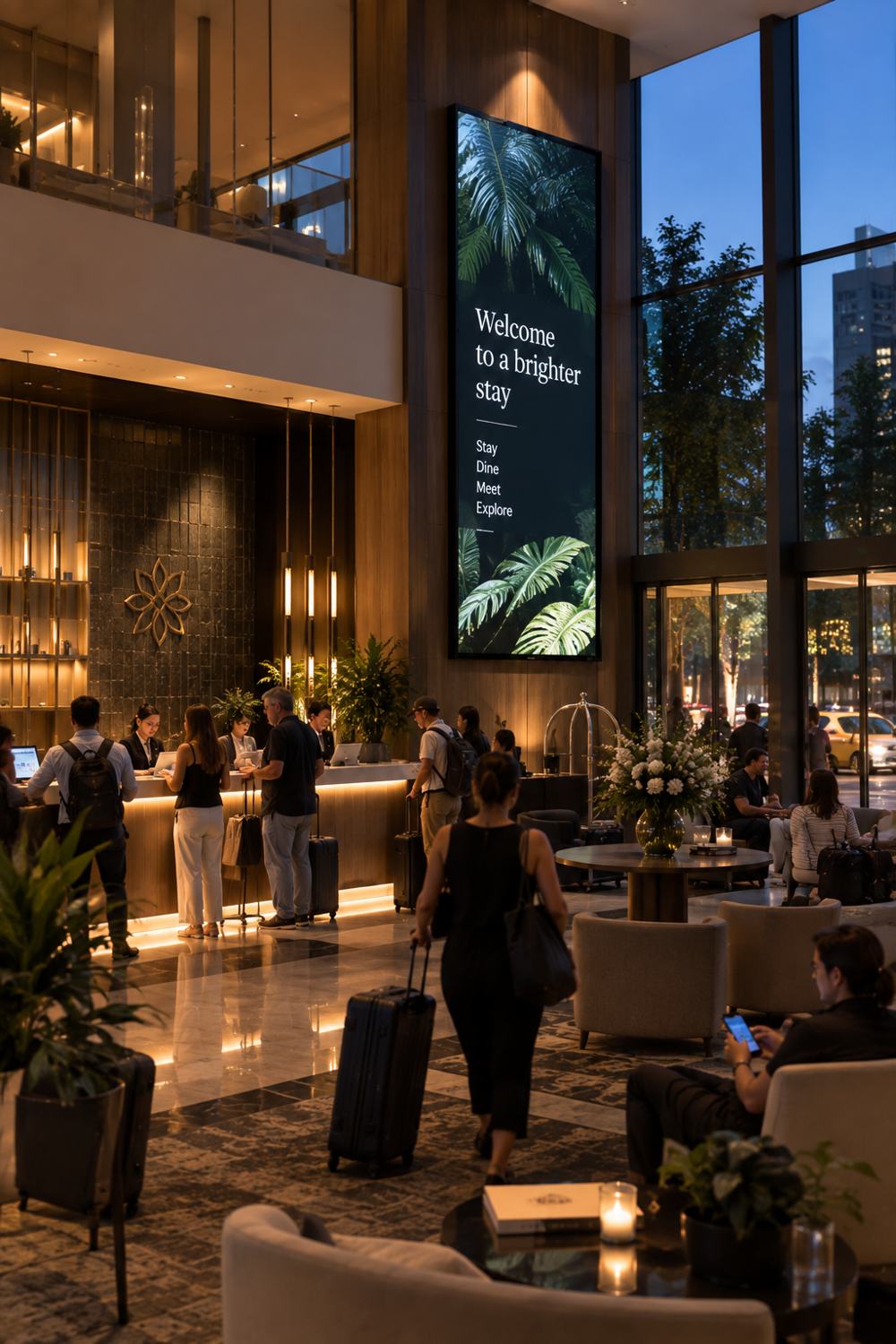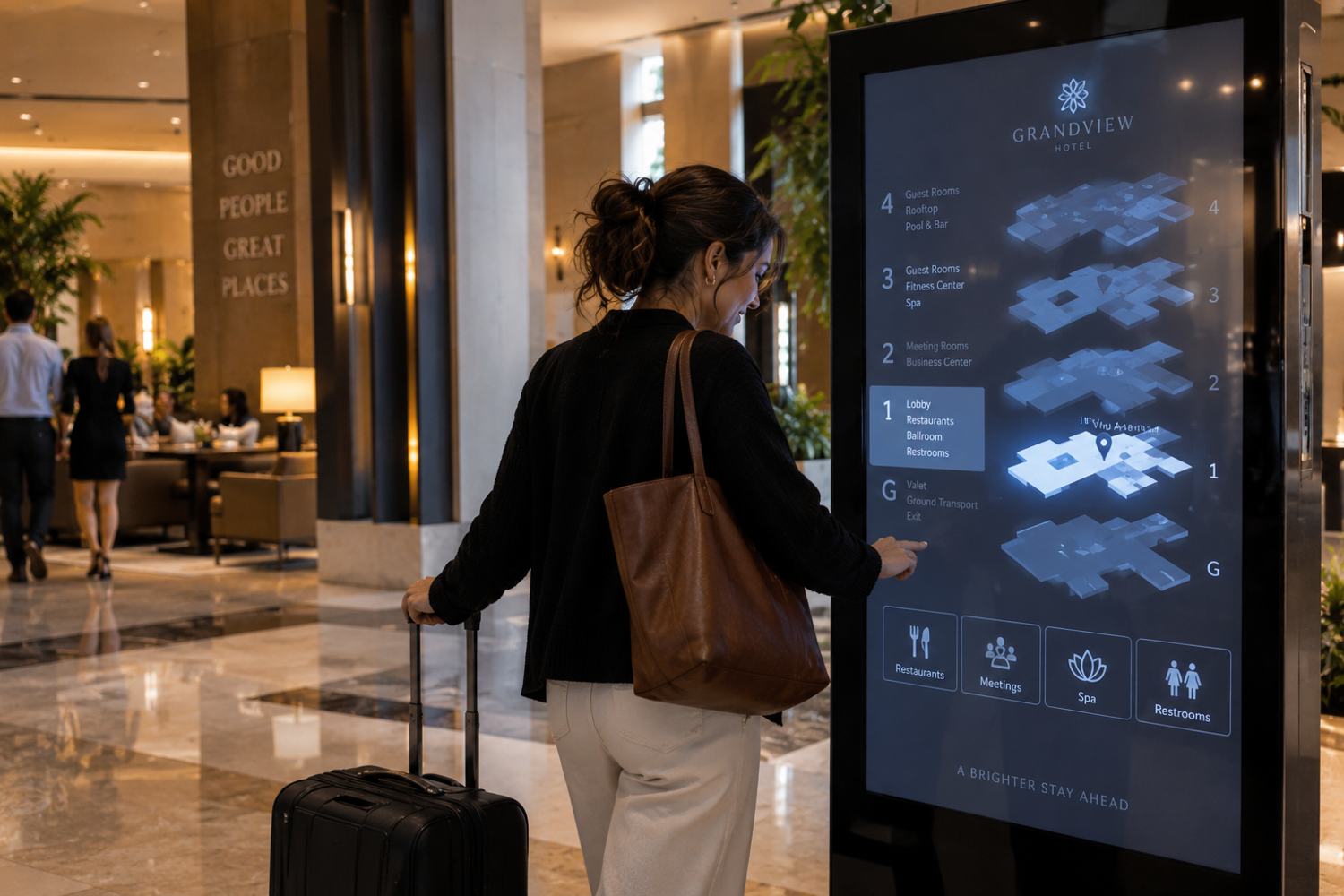
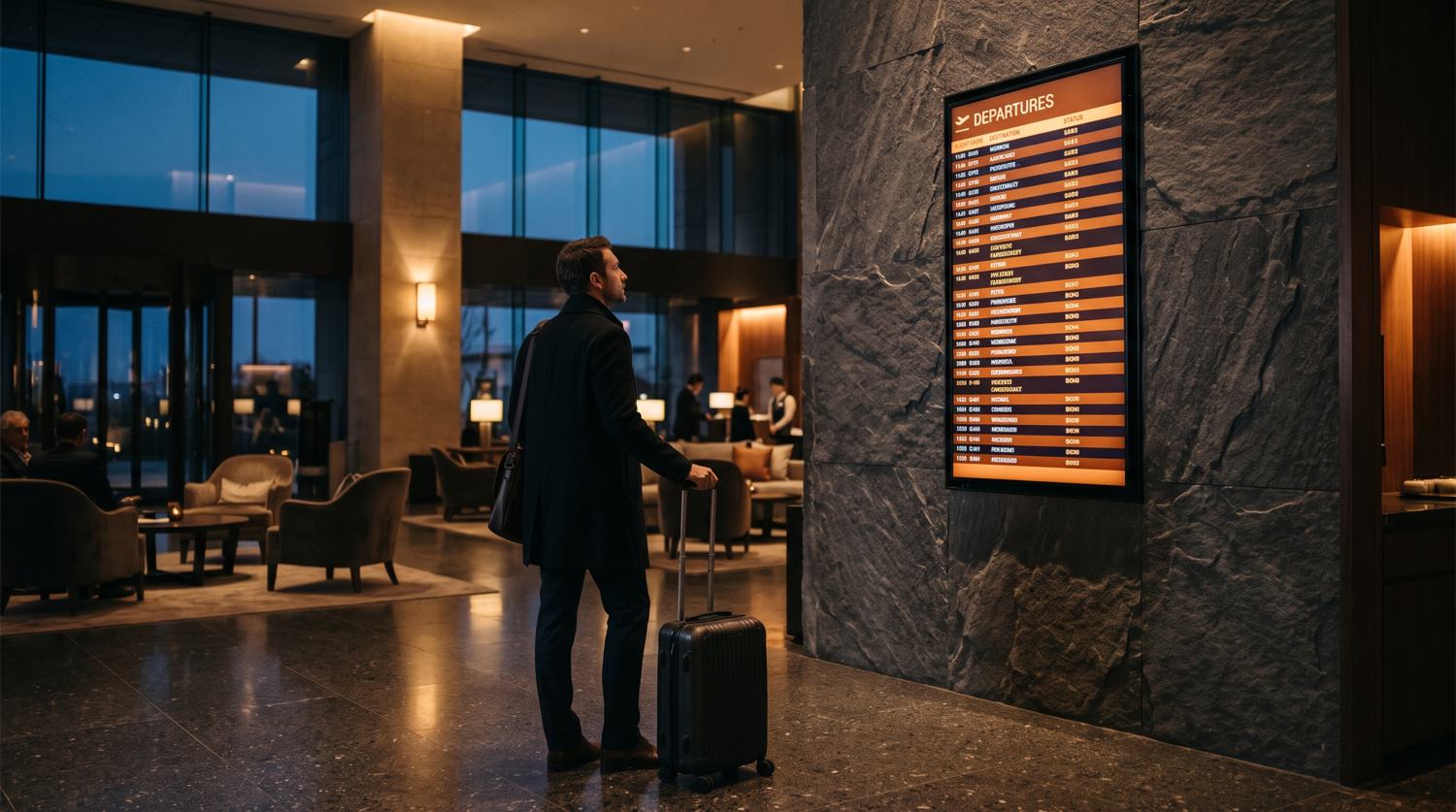
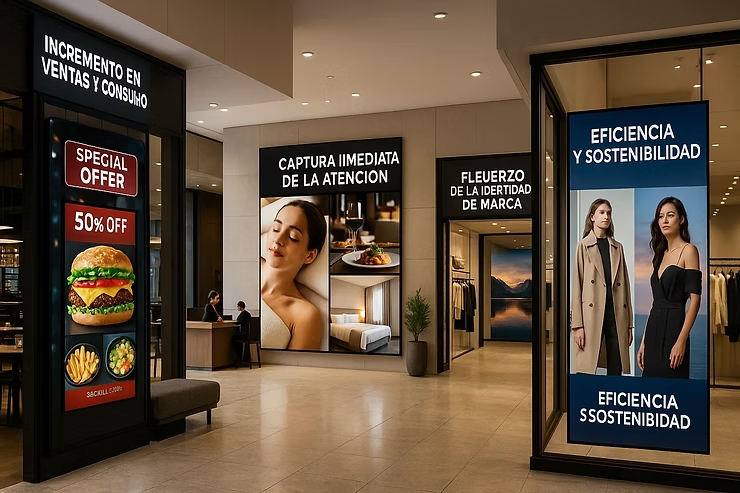
In a highly competitive environment, customer experience is what makes the difference. LED screens have become a powerful tool for hotels, restaurants and commercial spaces. They do more than deliver information: they create immersive experiences that capture attention, strengthen brand identity and can increase sales by up to 30%.
What are strategic LED screens?
They are digital devices designed to display content in a dynamic, attractive way, tailored to the business's objectives. Unlike static signage, LED screens let you:
- Deliver clear, personalized messages.
- Reinforce your brand's visual identity.
- Influence customer purchasing decisions.
- Optimize campaigns with real-time updates.
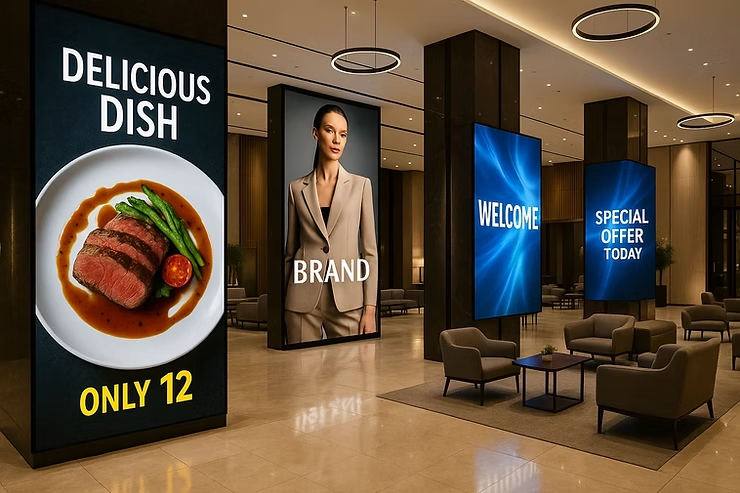
Benefits of LED screens in hotels and retail
1. More sales and consumption
Studies show that digital signage can boost sales by up to 30%. Example: digital menus in restaurants that highlight real-time promotions increase the average ticket.
2. Immediate attention
LED screens attract up to 400% more views than traditional posters. Example: in a hotel lobby, a screen with dynamic images of additional services generates more interest than a printed brochure.
3. Flexibility and personalization
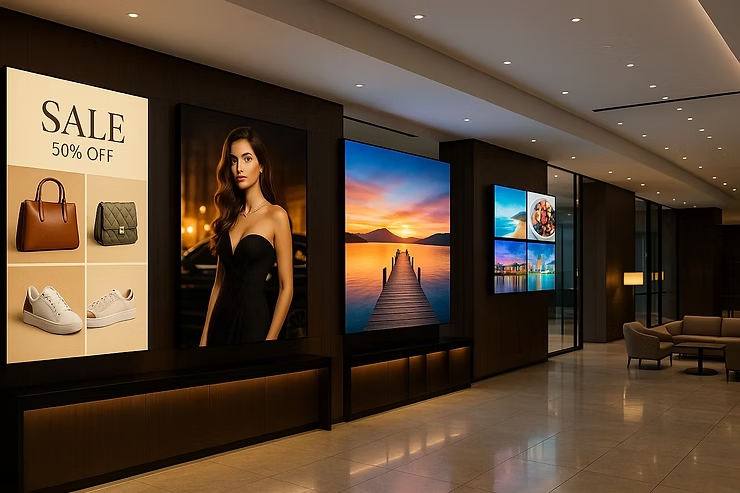
Content can be adapted by time of day, season or customer profile. Example: fashion stores show videos of new collections during the day and aspirational content at night.
4. Stronger brand identity
LED screens act as a canvas for visual campaigns that are consistent with your branding. Example: a boutique hotel can display immersive landscapes that reinforce its concept of exclusivity.
5. Efficiency and sustainability
- Savings on printed materials.
- Lower distribution and campaign update costs.
Success stories
Retail in Latin America
Electronics stores in Chile added interactive LED screens to display product comparisons. Result: a 22% increase in featured categories.
Hotels in Europe
Hotel chains in Spain installed LED screens in their lobbies to show real-time promotions for restaurants, spas and in-house events. Consumption of additional services grew by 28%.
Restaurants in the U.S.
Fast-food chains switched to digital menu boards with LED screens. Besides reducing printing costs, sales of promotional combos increased by 15%.
How to implement strategic LED screens in your business
Step 1: Define your objectives
- Do you want to sell more of specific products?
- Strengthen your brand image?
- Communicate promotions more clearly?
Step 2: Design a content plan
- Identify your target audience.
- Create dynamic, visual content.
- Adjust messages by time of day or season.
Step 3: Install the right LED screens
- Choose sizes and resolutions suited to the space.
- Plan strategic placement for maximum visibility.
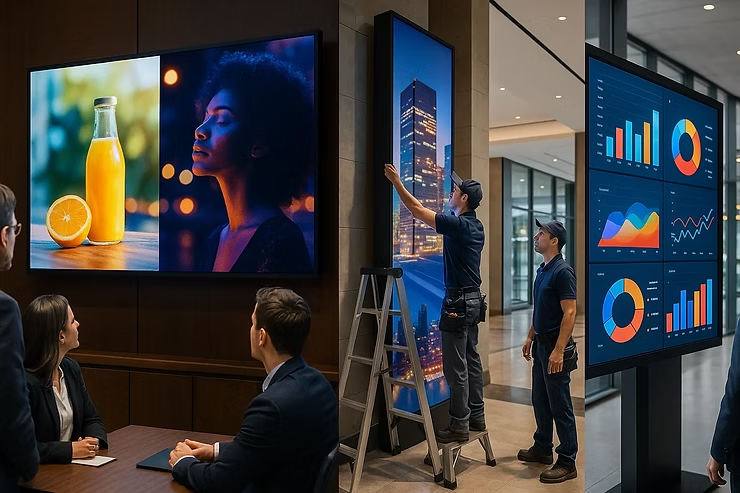
Step 4: Measure results
- Increase in sales of promoted products.
- Number of interactions or inquiries generated.
- Customer perception of the experience.
Frequently asked questions
Are LED screens only for big companies?
No. There are also affordable solutions for small businesses.
What kind of content should I display on LED screens?
Promotions, branding, useful information and dynamic content aligned with your brand.
Do LED screens consume a lot of energy?
Not necessarily. Most are designed with low-power, long-lasting technology.
Can I update content in real time?
Yes. One of the main advantages is flexible, remote campaign management.
Conclusions and takeaways
LED screens are more than decoration. They are a strategic sales and communication tool.
- They increase revenue, strengthen branding and improve the customer experience.
- Their flexibility and efficiency make them a profitable investment for both large chains and small businesses.
Want to transform your space with LED screens that capture attention and increase your sales? Contact us and discover how to implement strategic digital signage in your business.