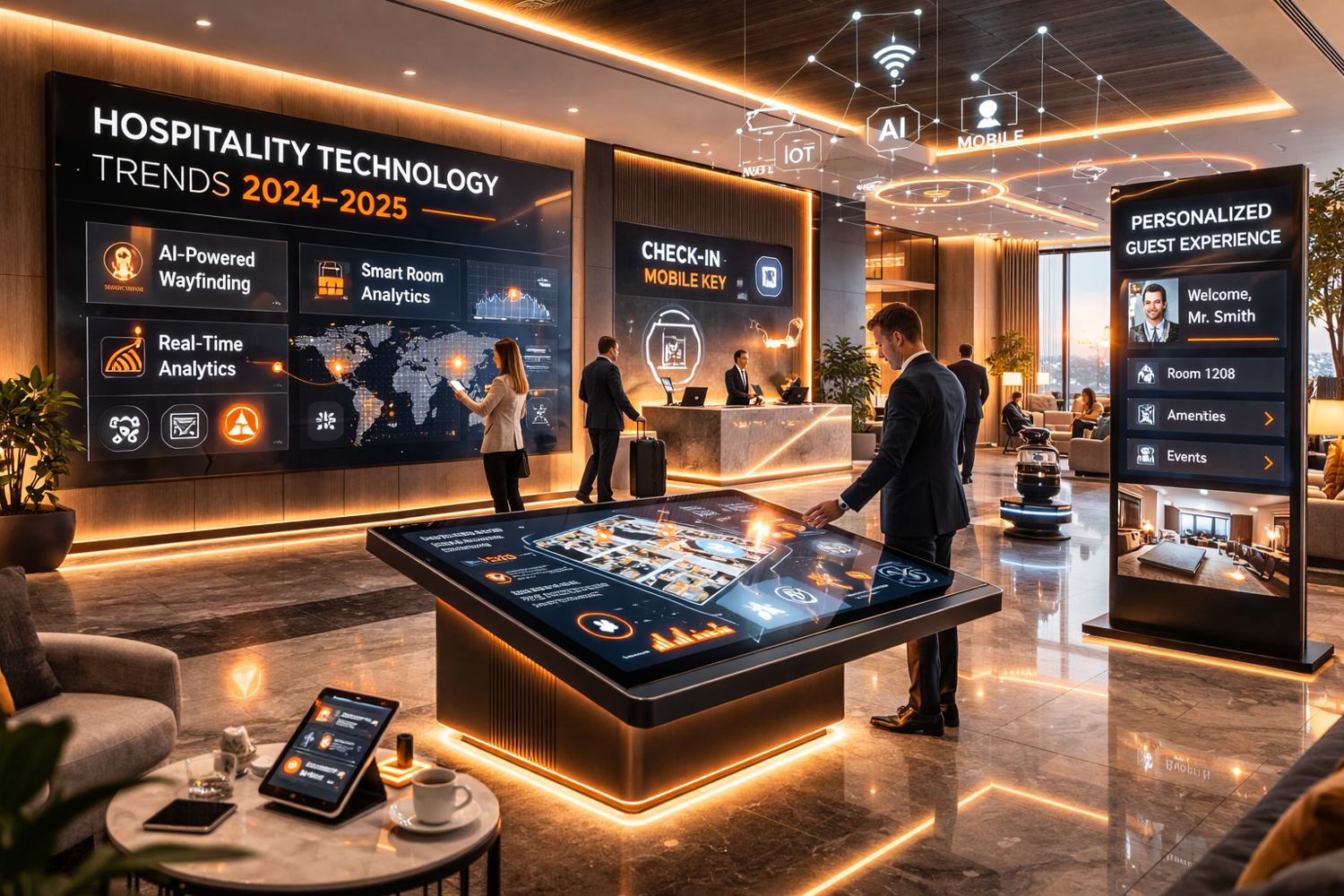
Hotel technology investment is no longer optional. It is the primary driver of competitive differentiation in 2025 and 2026. Guests arrive with expectations shaped by digital experiences in every other area of their lives, and properties that don't meet those expectations lose on reviews, repeat stays and rate premiums.
This research summarizes the most relevant technology trends for hotel operations teams and ownership groups, with a specific focus on where communication infrastructure fits in the broader digital transformation picture.
The digital transformation context
The hospitality industry's relationship with technology has shifted fundamentally since 2020. What was once a differentiator has become a baseline expectation. Hotel technology is no longer optional; it's essential. As guest expectations rise and market conditions shift rapidly, the hospitality industry must adopt smarter systems and digital-first thinking to stay competitive.
For hotel operations teams and ownership groups, the practical question is not whether to invest in technology but which investments deliver the highest operational and guest experience returns. The answer, consistently across 2024–2025 research, points to communication infrastructure as one of the highest-ROI technology categories, because it directly affects every guest touchpoint without requiring structural renovation.
Key trends for 2025–2026
1. Contactless and self-service as the new standard
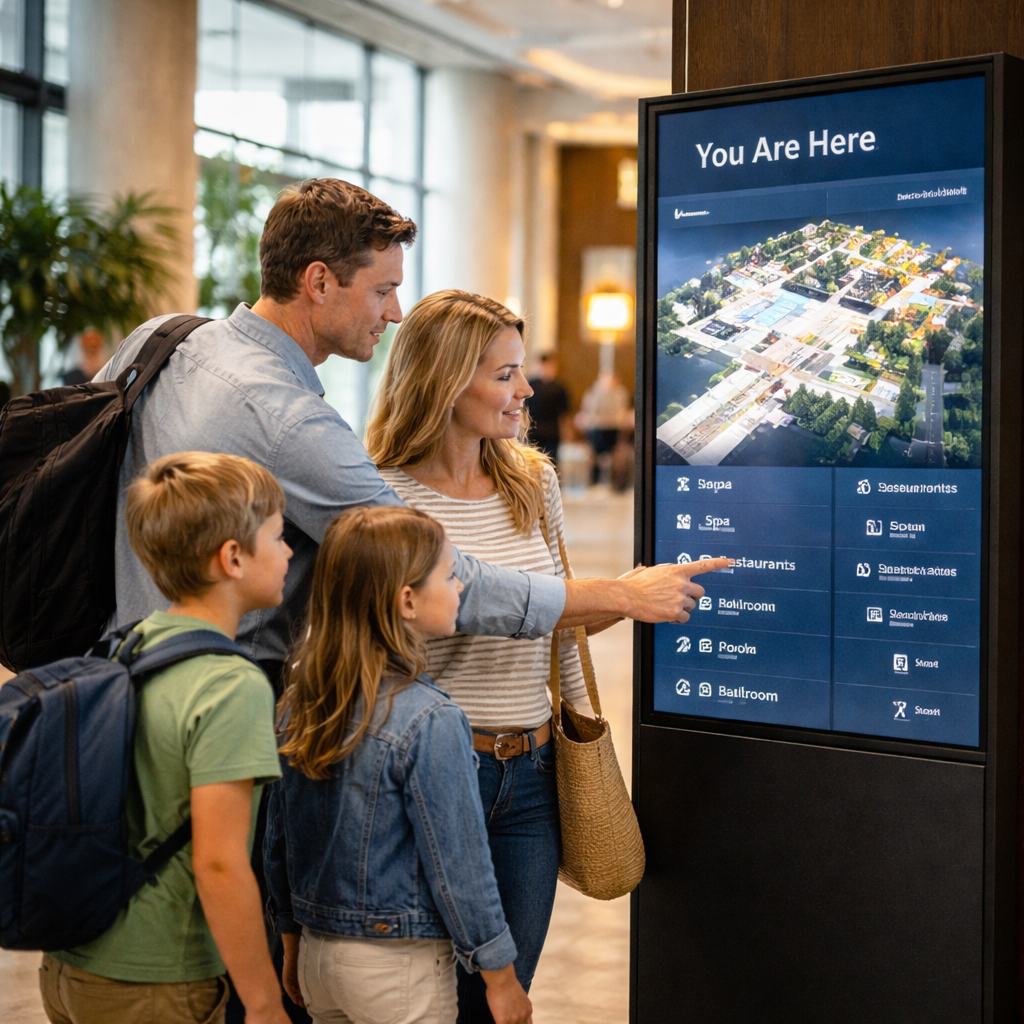
53% of guests prioritize hotels with contactless options. 52% value kiosk-based check-in. Digital information screens that allow guests to navigate, discover services and get answers without staff interaction are a core component of this shift, not a luxury add-on.
2. Personalization as table stakes
58% of hospitality brands say personalization is a top priority in 2025 (Escoffier/Publicis Sapient). Digital screens connected to PMS and CRM systems allow properties to deliver personalized content (welcome messages, targeted promotions, relevant event information) at scale across the property.
3. Communication infrastructure as an operational layer
The clearest trend across 2024–2025 hospitality technology research is the shift from point solutions to integrated layers. Digital signage is no longer evaluated as a standalone screen purchase. It is evaluated as a communication infrastructure layer connecting hotel systems (PMS, S&C, F&B) to guest-visible touchpoints across the property.
4. Staff reallocation through automation
The hospitality industry is addressing ongoing staffing challenges through technology that handles repetitive information delivery, allowing staff to focus on high-value guest interactions. Digital signage that answers directional and informational questions automatically is a direct contributor to this reallocation.
5. Sustainability and modernization pressure
80% of travelers say sustainable travel is important to them (Booking.com). Replacing printed signage with digital systems directly addresses this, eliminating paper waste, reducing print runs and demonstrating a visible commitment to sustainability that guests associate positively with the property.
Where digital signage fits in the technology stack
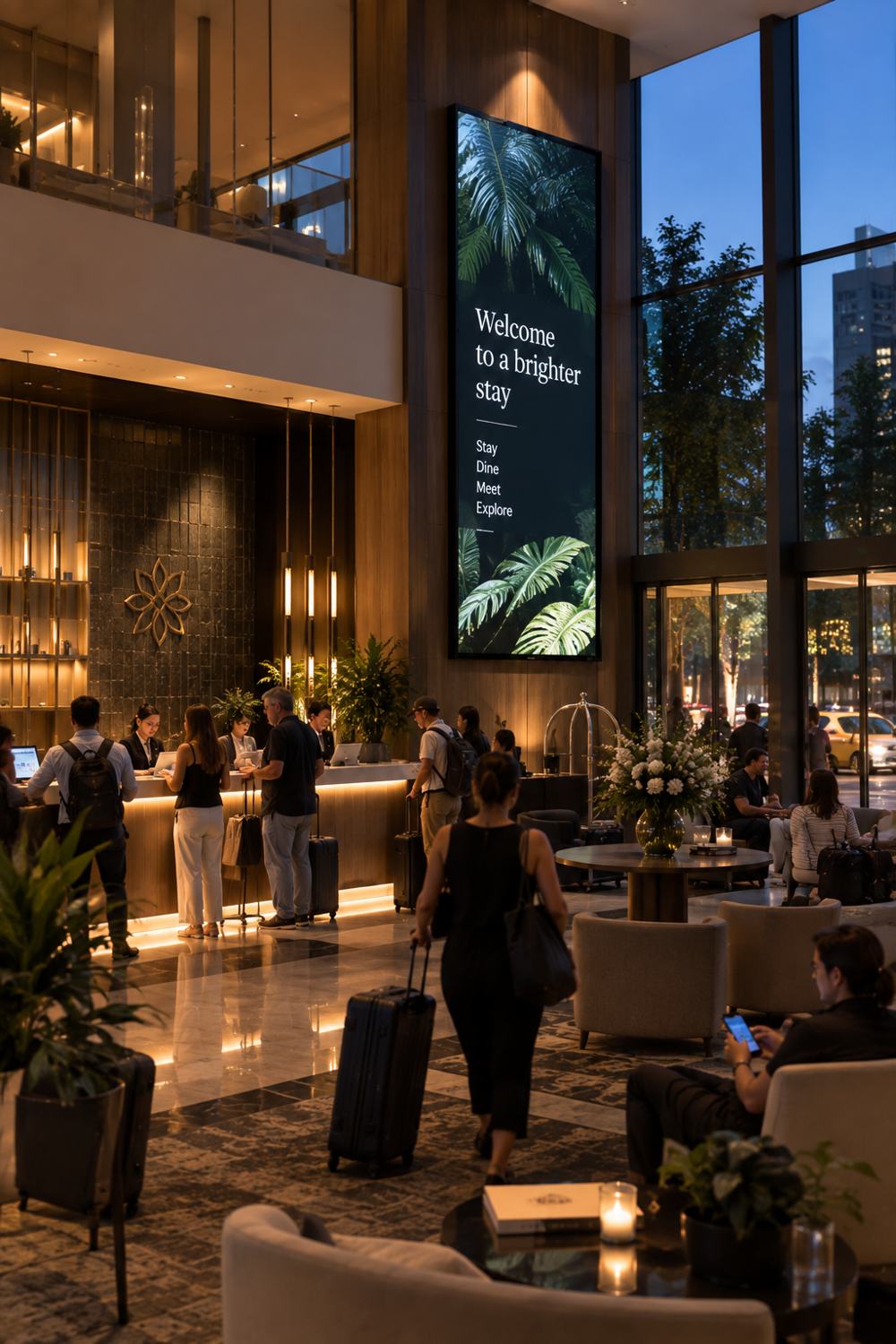
In the context of the 2025 hospitality technology landscape, digital signage occupies a specific and well-defined position: it is the communication distribution layer between hotel operational systems and guest-visible touchpoints.
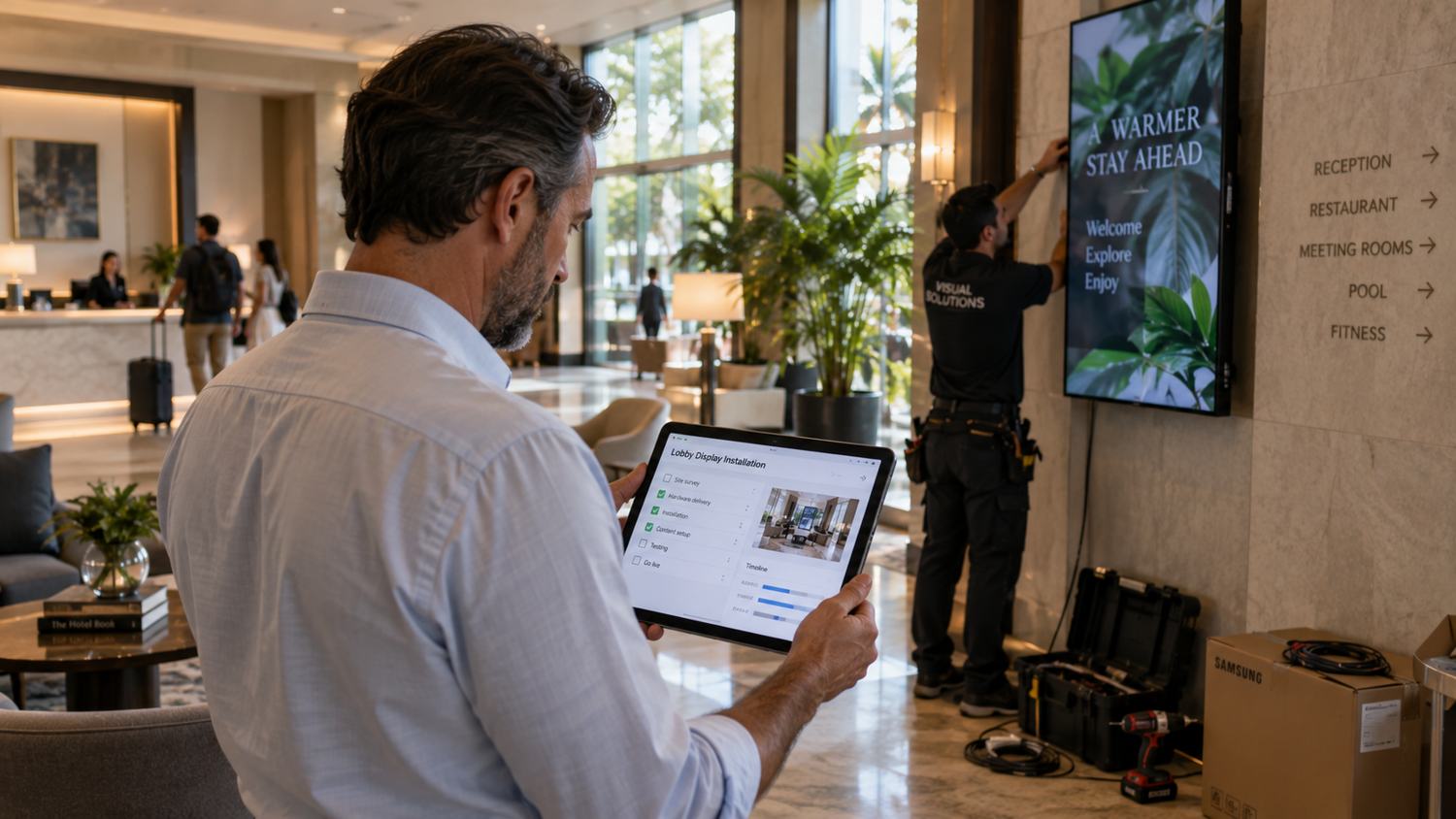
Unlike AI revenue management, CRM personalization engines or IoT room systems, all of which require significant infrastructure investment and extended implementation timelines, digital communication infrastructure can be deployed incrementally, integrated with existing PMS and S&C systems, and operational within weeks rather than months.
Technology investment priorities
Based on 2024–2025 industry surveys, hotel technology investment priorities are concentrated in three areas:
- Guest experience technology: digital touchpoints that directly affect how guests perceive and rate their stay
- Operational efficiency systems: technology that reduces labor costs, manual processes and error rates
- Revenue optimization tools: systems that increase ancillary revenue, upsell conversion and average spend per guest
Digital communication infrastructure (including lobby signage, meeting room displays, wayfinding and F&B promotion screens) contributes measurably to all three categories simultaneously, which is why it consistently ranks among the highest-ROI technology investments for full-service hotels.
Key data summary
- 53% of guests choose hotels based on digital experience offerings (Acropolium 2025)
- 57% of millennials more influenced by hotel technology (Hotel Tech Report 2025)
- 58% of hospitality brands say personalization is a top 2025 priority (Escoffier/Publicis Sapient)
- 30% of hoteliers say technology delivers the highest ROI (Acropolium Survey 2024)
- 80% of travelers say sustainable travel is important (Booking.com)
- Global hospitality digital signage market projected to reach $4.09 billion by 2032 at 6.5% CAGR (AIScreen 2025)